
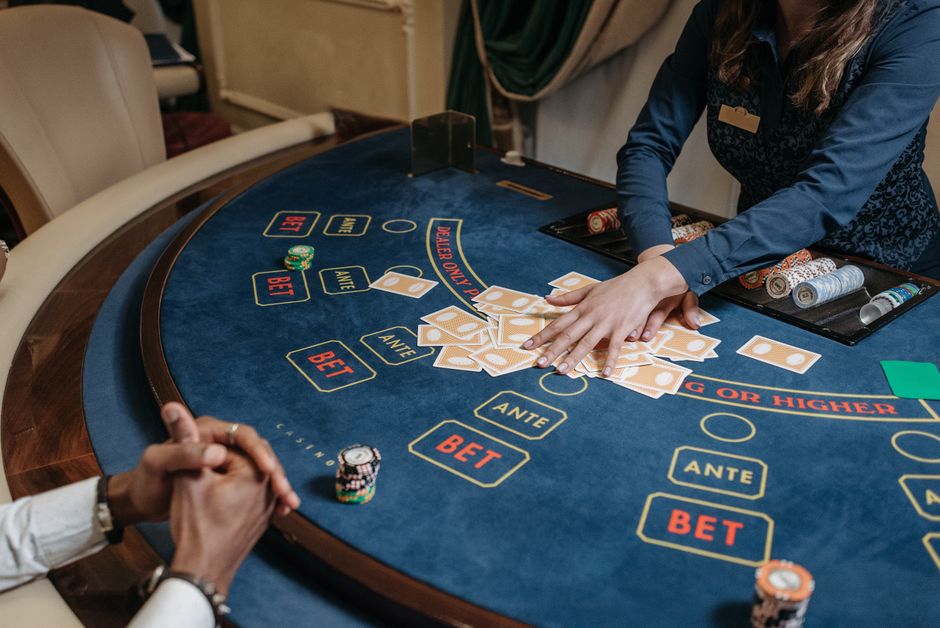
The House Always Wins? Five Ways Smart Players Beat the Odds
Every casino floor tells the same silent joke: the carpet is loud, the lights are bright, and the math is quietly stacked against you. That's not cynicism — it's arithmetic. But here's what separates a frustrated gambler from a disciplined one: the smart player doesn't try to beat the math, they learn to dance with it. Whether you're spinning slots at 2 a.m., grinding micro-stakes poker, or hunting value in a Saturday football card, the difference between bleeding money and actually enjoying the ride comes down to understanding a few uncomfortable truths.
The One Number Most Players Ignore
Ask ten casino-goers what a slot machine's RTP means and you'll get ten blank stares. Return to Player is the theoretical percentage of all wagered money a game pays back over millions of spins. A 96% RTP slot returns $96 for every $100 played — theoretically. The trouble is that "theoretically" is doing a lot of heavy lifting in that sentence. On any given session, variance can swing wildly. You might triple your bankroll in twenty minutes or lose it in ten. If you want to dig deeper, สล็อตเว็บตรง is worth a look.
Why does this matter? Because RTP should influence which games you choose, not what you expect in a single night. Two slots can look identical but sit at 94% and 97%. Over a thousand spins of $1 stakes, that gap is roughly $30 in expected loss. Over a year of regular play, it's a rent payment.
- Above 96% RTP: Generally favorable for slots; check the game info screen.
- 94–96%: Standard online average — acceptable if you love the game.
- Below 94%: Walk away unless it's purely for entertainment.
Poker Is the Only Game Where You're Not the Fish (Sometimes)
Here's a refreshing fact: blackjack, roulette, and slots all have fixed house edges. Poker doesn't. In Texas Hold'em, you're not playing against the casino — you're playing against other humans, and the house just takes a rake. That means a skilled player can achieve a positive expectation over time. The catch is brutal but honest: if you can't identify the fish at the table within fifteen minutes, you're the fish.
Three skills that separate winning poker players from break-even ones
- Position awareness. Acting last gives you information. Playing 30% of hands from the button and 12% from early position is a fundamental adjustment most amateurs never make.
- Bankroll management. A winning player with 10 buy-ins will still go broke. Twenty to thirty buy-ins for cash games is a common rule of thumb.
- Emotional detachment. Tilt costs more money than bad beats. Recognizing when you're steaming and closing the laptop is a skill worth thousands.
Compare this to roulette, where the house edge is a fixed 2.7% on European wheels (5.26% on American double-zero tables — always choose single-zero if you can). No amount of concentration changes that number. You can only change how long you expose your money to it.
Betting Markets Reward Information, Not Hunches
Sports betting has exploded in legitimacy over the past decade, and with it has come a wave of bettors who think they can outsmart the bookmakers. Most can't. But the ones who do share a trait: they treat betting like a market, not a lottery.
Bookmakers set opening lines to balance action, not necessarily to predict outcomes. When sharp money floods in, lines move. If you can spot a soft number before it adjusts — say, the total goals line in a low-scoring league where the public overvalues offense — you've found value. That's the entire game. It's not about picking winners; it's about identifying when the odds offered are higher than the true probability of an outcome.
A practical example: a moneyline of +150 implies a 40% chance of winning. If your own analysis puts the true probability at 48%, that's an edge worth taking. Repeat that over hundreds of bets and the math works in your favor. The discipline lies in only betting when the edge exists.
Bonuses and Promotions: Read the Fine Print or Pay the Price
Online casinos dangle welcome bonuses like candy: 100% match up to $500, 200 free spins, cashback on losses. These offers can genuinely add value, but they're wrapped in wagering requirements designed to protect the operator, not you. A 40x wagering requirement on a $200 bonus plus deposit means you need to play $8,000 before withdrawing anything. If the game RTP is 96%, that's an expected loss of roughly $320 — more than the bonus is worth.
- Look for low wagering: 20x or less is player-friendly.
- Check game contributions: Many slots count 100% toward wagering, but table games often contribute 10% or less.
- Watch time limits: Some bonuses expire in seven days — fine if you play daily, a trap if you don't.
A bonus with a 35x requirement and a 96.5% RTP slot can still be profitable if you play it carefully and don't let the spin speed lure you into over-betting. The bonus isn't free money; it's a temporary edge you have to manage like any other.
The Bankroll Rules That Actually Keep You in the Game
Nobody wants to hear about bankroll management. It sounds boring, like budgeting advice from a relative. But here's the unglamorous truth: the players who survive long enough to get lucky are the ones who never risked money they needed.
Set a session limit before you sit down or log in — an amount you're genuinely fine losing. When it's gone, stop. Don't chase. Don't "double or nothing" your way back. The math of recovery bets is merciless: to recover a $100 loss on a 50/50 bet, you'd need to risk $200, then $400, then $800. One bad streak and your bankroll is ash.
As a rule of thumb, a single session should never expose more than 5% of your total gambling budget. If your budget is $500 per month, your session cap is $25. That sounds tiny, but it's the difference between a hobby and a problem.
Final Thought: Play Like You're Paying for Entertainment
The house always wins in aggregate — that's not up for debate. But aggregate losses don't have to describe your experience. If you treat casino games as entertainment with a built-in cost, like a concert ticket or a night out, you can enjoy the thrill without the regret. The players who lose the most are the ones chasing the impossible, convinced they're due. The players who walk away smiling are the ones who set limits, chose games wisely, and treated every session as a story to tell rather than a score to settle. The odds don't owe you anything. But your own discipline can tilt the experience heavily in your favor.
tag: iGaming

James Whitcombe Author
Master consistent wall thickness by pinching evenly and pulling slowly from the base to the rim with steady hand pressure.
YOU MAY ALSO LIKE

How to Pull Up Even Walls on the Wheel
Sep 22
10Turn leather-hard pots on the wheel to refine foot rings and create balanced forms without distorting delicate walls.
read more
Trimming and Shaping Leather-Hard Pots Successfully
Sep 19
10Create bowls and cups by pinching clay between thumb and fingers, then smooth surfaces with a damp sponge.
read moreWheel Throwing
-

ERRIC CATONA
Build height gradually by joining coils with slip and scoring, blending each seam before the clay dries completely.
May 19, 2016 at 5.12 pm
Reply
ERRIC CATONA
Construct sturdy boxes by cutting accurate slabs and joining mitred edges with slip, then reinforce internal corners for strength.
May 19, 2016 at 5.12 pm
Reply -
ERRIC CATONA
Learn how silica, alumina and fluxes interact to create durable glazes that fit your clay body well without crazing.
May 19, 2016 at 5.12 pm
Reply
Hand Building
Your email address will not be published.